
Are You Tracking Your Stock Rotation?
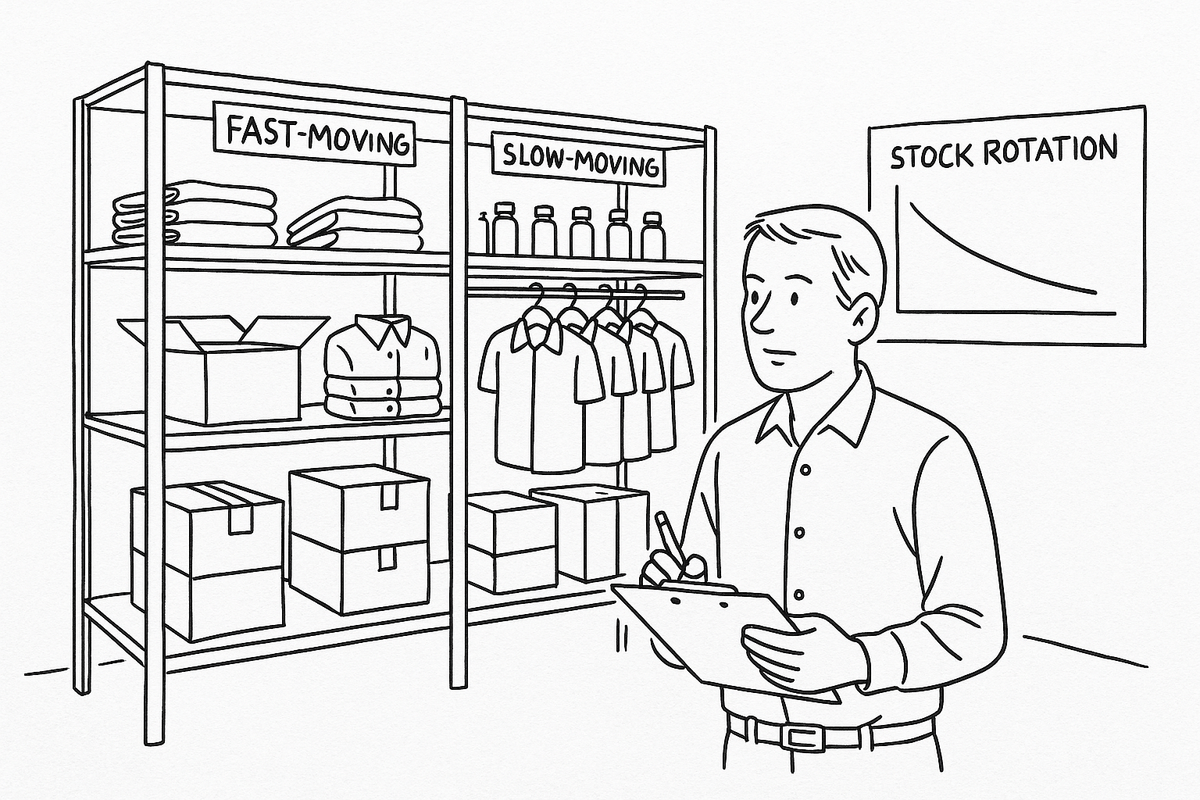
Here’s Why Every Retailer Must
Most apparel retailers believe that profits come only from selling more. But here’s the hidden truth: profits often depend on how fast your stock rotates. If your shelves are full of unsold items, your working capital is trapped. And if your fast-moving items run out, you lose immediate sales.
📌 What Is Stock Rotation?
Stock rotation measures how quickly you sell and replenish items. It’s usually expressed as the Inventory Turnover Ratio:
Inventory Turnover Ratio = Cost of Goods Sold (COGS) ÷ Average Inventory
A higher ratio means your products are selling quickly. A lower ratio means you’re holding too much stock, locking up cash and space.
🚨 Why Retailers Miss Out
- Overstocking: Buying more than needed for slow-moving items.
- Dead Stock: Products that don’t sell even after discounting.
- Stockouts: Running out of fast sellers at peak time.
Most retailers guess these patterns by “gut feel” instead of hard data — and that’s where margins quietly disappear.
✅ How Quanto ERP Helps
Quanto ERP gives you real-time rotation insights:
- Color-coded dashboards (green = fast, red = slow).
- Rotation alerts for products that haven’t sold in X days.
- Cash flow impact — see how much capital is stuck in slow movers.
- Smart replenishment rules for fast sellers, preventing stockouts.
- Promotional strategies for clearing dead stock (Buy 2 Get 1, bundles).
Instead of guessing, you get data-driven actions that directly increase your profitability.
💡 Example: Two Stores, Two Stories
Store A and Store B both have ₹10,00,000 worth of stock. - Store A rotates stock 4 times a year → ₹40,00,000 sales potential. - Store B rotates stock 8 times a year → ₹80,00,000 sales potential.
Same investment, double the revenue.
🚀 Takeaway
Stock rotation isn’t just an accounting ratio — it’s the heartbeat of retail. Track it, act on it, and optimize it, and your profits will multiply.
With Quanto ERP, you don’t just see your numbers. You control them.
https://quantoretail.com