
Dead Stock in Apparel Retail: The Silent Killer of Profits
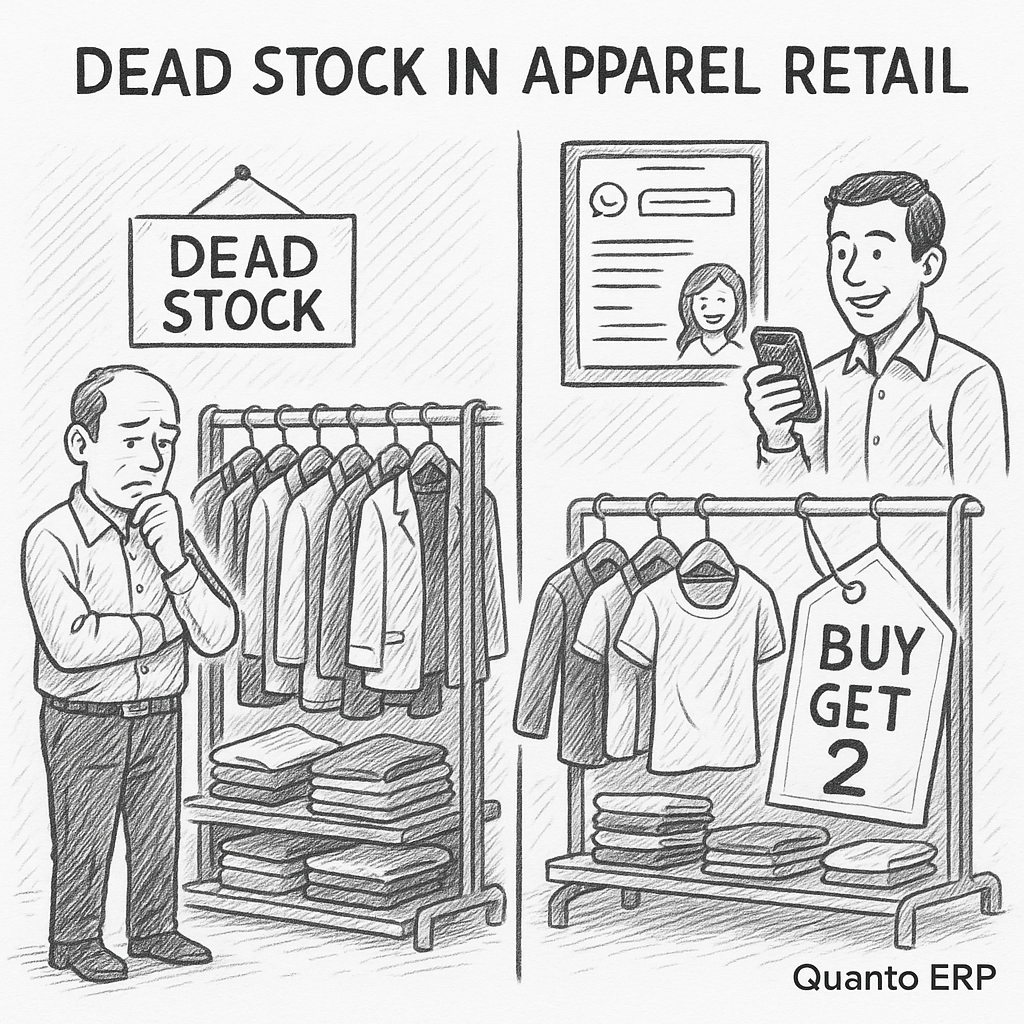
In apparel retail, sales may look strong on paper, but hidden deep in your inventory is a silent killer — dead stock.
Dead stock is unsold inventory that lingers far beyond its selling cycle. It blocks your capital, eats up storage, and silently reduces your profitability.
Most retailers realize too late that dead stock isn’t just leftover stock — it’s a sign of poor buying decisions, weak demand forecasting, and missed promotions.
🕵️ How Do You Identify Dead Stock?
The simplest way: barcode age analysis.
- Every product has a stock age — the number of days since it entered your inventory.
- Find the average stock age for each category or product type.
- Any item with an age 2× greater than the average can be flagged as potential dead stock.
Example:
- Average stock age for men’s shirts = 45 days.
- A batch of shirts with barcodes aged 90+ days is now dead stock.
👉 This method uses real data instead of gut feeling. It works across designs, price ranges, and even suppliers.
⚠️ The Hidden Cost of Dead Stock
- Capital Lock: Your money is stuck in non-moving items instead of new designs.
- Shelf Space Waste: Dead stock blocks your racks, leaving no room for new arrivals.
- Discount Pressure: The longer it stays, the steeper the discounts required to clear it.
- Customer Perception: Old designs on display reduce your brand freshness.
🧩 How to Reduce Dead Stock
1. Analyze Dead Stock by Design & Price Range
- Are certain designs not selling (wrong color, poor fit)?
- Are certain price ranges too high for your customer base?
By segmenting dead stock, you avoid repeating the same mistakes in future purchases.
2. Run Targeted WhatsApp Campaigns
Instead of blasting generic offers, use customer history:
- Find customers who bought similar products before.
- Run WhatsApp campaigns promoting discounts on those items.
👉 Personalized offers = higher chance of clearing stock.
3. Create Promotional Bundles
- Buy 1 Get 2: A classic apparel tactic for slow-moving stock.
- Bundle with Fast Movers: Pair an unpopular color/size with a best-selling item.
Example:
- Customer buys a trending blue shirt. Offer an extra discount if they add a slower-moving green variant.
- Result: capital released, shelves cleared, happy customers.
4. Monitor Dead Stock Early
Don’t wait until items are one year old.
- Set ERP alerts when items cross 2× average stock age.
- Run small clearance campaigns every quarter instead of giant end-of-season dumps.
📊 A Realistic Example
A retailer had ₹20 lakhs of stock.
- Average stock age: 60 days.
- ₹5 lakhs worth of barcodes were sitting at 130+ days.
- Instead of writing it off, the retailer:
- Ran a WhatsApp campaign for customers who bought similar fabrics.
- Offered Buy 1 Get 2 on the slowest designs.
- Paired dead stock shirts with fast-selling trousers.
Result:
- Cleared 70% of dead stock in 30 days.
- Recovered ₹3.5 lakhs of locked capital.
- Freed racks for new season collections.
🚀 Takeaway
Dead stock is inevitable — but letting it rot in your racks is optional.
The best retailers treat dead stock as an opportunity:
- Identify early with barcode age analysis.
- Act fast with targeted campaigns.
- Bundle smart to clear shelves without killing margins.
👉 With the right ERP-driven insights, dead stock doesn’t have to be dead money. It can be converted back into sales, space, and customer delight.