
GST Slab Changes: What It Means for Us in the Apparel Business
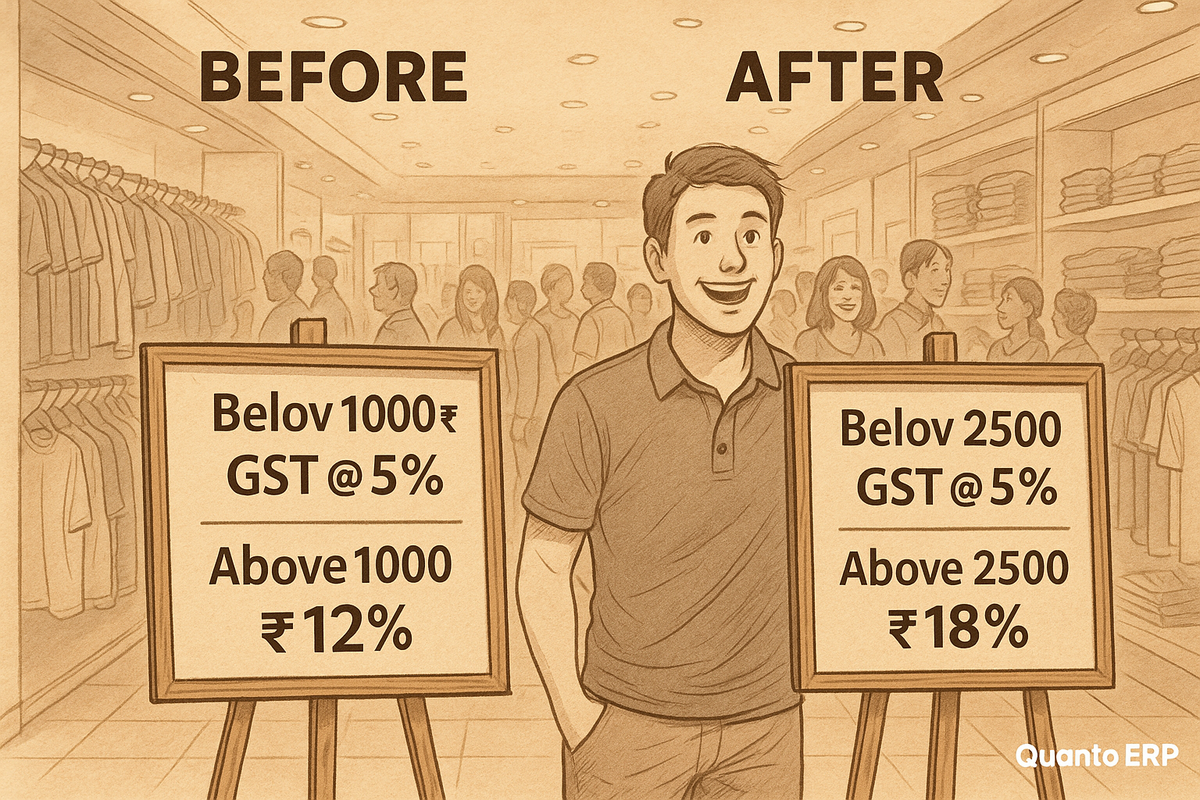
As a retailer in the ready-made garment trade, the recent GST changes are something I can’t ignore. Here’s how I see it from the shop floor:
1. Relief for Budget Buyers
Earlier, only clothes up to ₹1,000 had 5% GST. Now, the limit has been raised to ₹2,500.
👉 For my customers, that’s a big relief. Everyday shirts, kurtis, trousers, dresses — all fall under this range. Lower GST means better pricing, more walk-ins, and hopefully higher volumes for us.
2. Mid-Range Turning Costlier
Here’s the flip side: garments priced above ₹2,500 will now attract 18% GST (up from 12%).
👉 That means premium sarees, suits, branded jeans, and jackets will feel more expensive. Customers may hesitate, which could slow down sales in the higher ticket segment.
3. Festive Season Advantage
With Diwali and wedding season coming up, customers always look for value. Thanks to the new rule, we can confidently pitch products under ₹2,500 as “more affordable than before.”
👉 This may boost bulk buying, especially for family shopping.
4. Stock & Pricing Strategy
We retailers will need to rethink stock planning.
- Push affordable categories harder (₹500–₹2,500).
- Carefully position higher-end items so that GST doesn’t scare away buyers.
👉 Volume will play a bigger role than margin in the coming months.
5. The Bigger Picture
Yes, premium items will take a hit, but overall the move helps small-to-mid range garment retailers like me. Most of my customers buy within ₹2,000 anyway.
👉 If sales volume grows, it could offset the tax burden on the higher-end pieces.
✅ Bottom Line: As a ready-made retailer, I see this GST change as an opportunity. It rewards affordability and mass appeal. Now it’s up to us to stock smart, price wisely, and make the most of the festive rush.