
Why Centralized ERP Is the Backbone of Multi-Store Retail
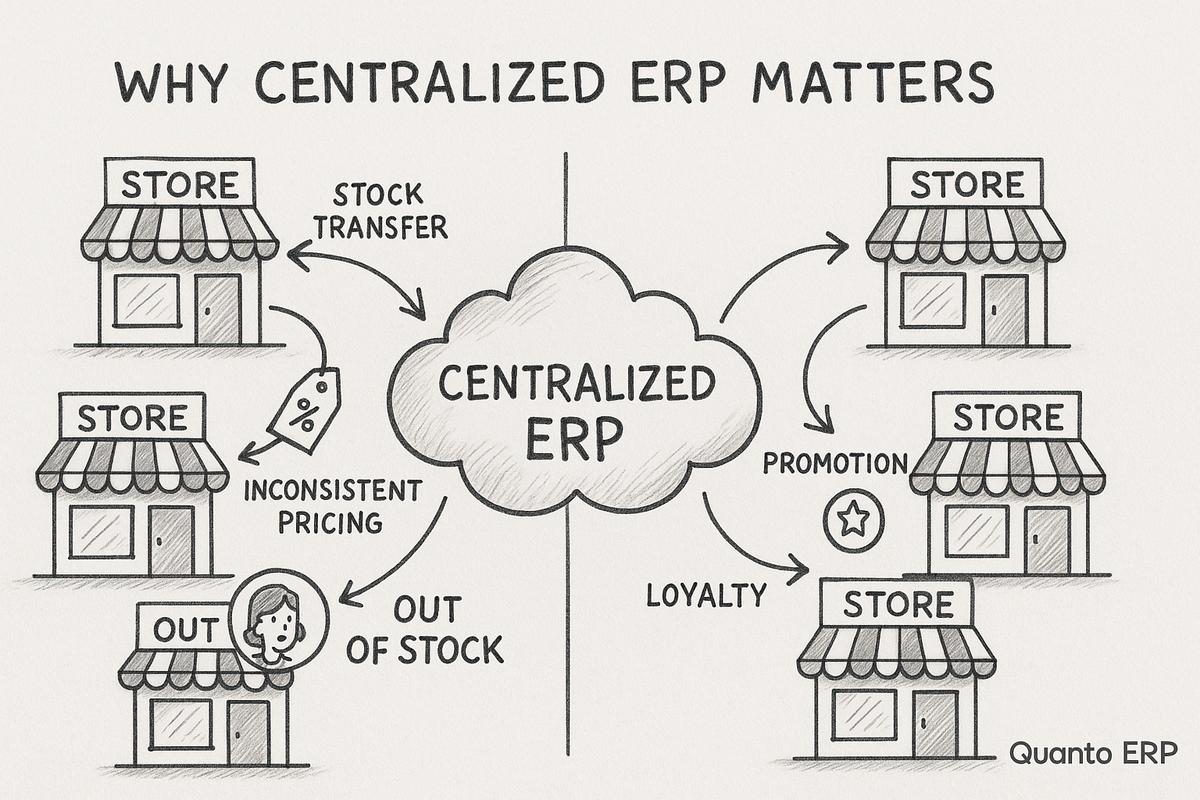
Running one apparel store is challenging enough — managing stock, customers, and staff all at once. But the real test begins when you open the second, third, or tenth store. Suddenly, the same issues multiply: excess stock in one location, shortages in another, inconsistent pricing, and endless phone calls to track transfers.
This chaos is the reason why multi-store retailers need a centralized ERP system. Without it, growth feels like a burden. With it, growth feels like opportunity.
🏬 The Problem Without Centralization
- Stock Imbalance: Store A sells out of size M while Store B has piles of the same size collecting dust. By the time you notice, the season is over.
- Scattered Data: Each branch maintains its own sales and stock reports. Head office decisions are delayed because no one has a unified picture.
- GST & Compliance: Filing branch-wise returns becomes a nightmare when data is fragmented.
- Inconsistent Pricing & Offers: A discount runs in one store but isn’t updated in another. Customers lose trust in the brand.
- Slow Transfers: Moving stock between branches depends on manual requests and approvals, wasting precious selling days.
✅ What Centralized ERP Brings to the Table
1. Unified Inventory
A centralized ERP shows real-time stock levels across all branches. Managers instantly see where M sizes are short and where they’re overflowing. Transfers become data-driven, not guesswork.
2. Centralized Billing & Pricing
- Prices, discounts, and offers are pushed from one dashboard.
- Customers see consistency whether they shop in Chennai or Coimbatore.
- Loyalty points and credits work across all branches seamlessly.
3. Simplified Compliance
GST, e-invoicing, and other statutory reports are generated at the organization level. Instead of juggling branch-wise spreadsheets, retailers get consolidated reports with a single click.
4. Faster Decision-Making
With every sale, return, and transfer updated live, owners no longer wait for month-end summaries. They can act in real time — reorder hot-sellers, mark down slow movers, or shift stock instantly.
5. Customer-Centric Experience
- Customers can buy in one store and exchange in another.
- Loyalty rewards are redeemable everywhere.
- A consistent brand experience builds long-term trust.
📊 Real Example
One retailer had 5 branches. Each branch manager sent weekly Excel sheets to head office. By the time all data was compiled, they were already two weeks late in spotting issues.
- One store had a glut of XL shirts. Another ran out. Customers walked away.
- Discount campaigns were inconsistent.
- GST filings took extra manpower just to reconcile.
After shifting to centralized ERP:
- Stock transfers became automatic.
- Head office had live dashboards of every branch.
- Seasonal sales were synchronized across all stores.
- Compliance time dropped by 70%.
🚀 Takeaway
Multi-store retail cannot scale without centralization. Every new branch increases complexity, and without a backbone system, the weight crushes profitability.
👉 A centralized ERP gives retailers the clarity, consistency, and control they need.
👉 Instead of drowning in chaos, they operate like a single, well-oiled machine.
✨ End line: “One store can survive on instinct. Many stores demand intelligence — and that intelligence comes from centralization.”